Photo via Pexels
Lee County is boat country. The Caloosahatchee River, Pine Island Sound, Sanibel, Captiva, and the Gulf are all within a short drive, and on any given weekend the boat ramps from Punta Rassa to Matlacha are busy from dawn onward. If you own a boat, the question is not whether you need a tow vehicle. It is which kind: a pickup truck or an SUV. Both can tow, both are common on Fort Myers roads, and both have loyal fans who will tell you the other one is wrong. The truth is more practical than that, and it depends on your boat, your ramp, and what the vehicle does the other six days of the week.
First, know your boat and your trailer
Before you compare trucks and SUVs, you need one number that matters more than any other: the total weight you will actually tow. That is the boat, the motor, the fuel, the gear, and the trailer itself, all added together. A small flats boat on a single-axle trailer is a very different job from a center console on a tandem-axle trailer, and the tow vehicle that handles one comfortably may struggle with the other.
Every vehicle has a tow rating, and that rating is a maximum, not a target. The smart approach is to leave a comfortable margin, because towing at the very edge of a rating is hard on the transmission, the brakes, and the cooling system, especially in Florida heat. A vehicle rated well above your loaded trailer weight will tow more calmly, stop more confidently, and last longer doing it.
You also need to know the tongue weight, which is the downward force the trailer puts on the hitch. Too little tongue weight and the trailer sways. Too much and the rear of the tow vehicle sags, the steering goes light, and the headlights point at the sky. Both trucks and SUVs can handle proper tongue weight, but trucks generally have more suspension capacity in reserve, which matters when the trailer is heavy. If you are not sure of your numbers, weigh the loaded trailer at a public scale before you shop. Guessing is how people end up with the wrong vehicle.
The truck's case: built for the job
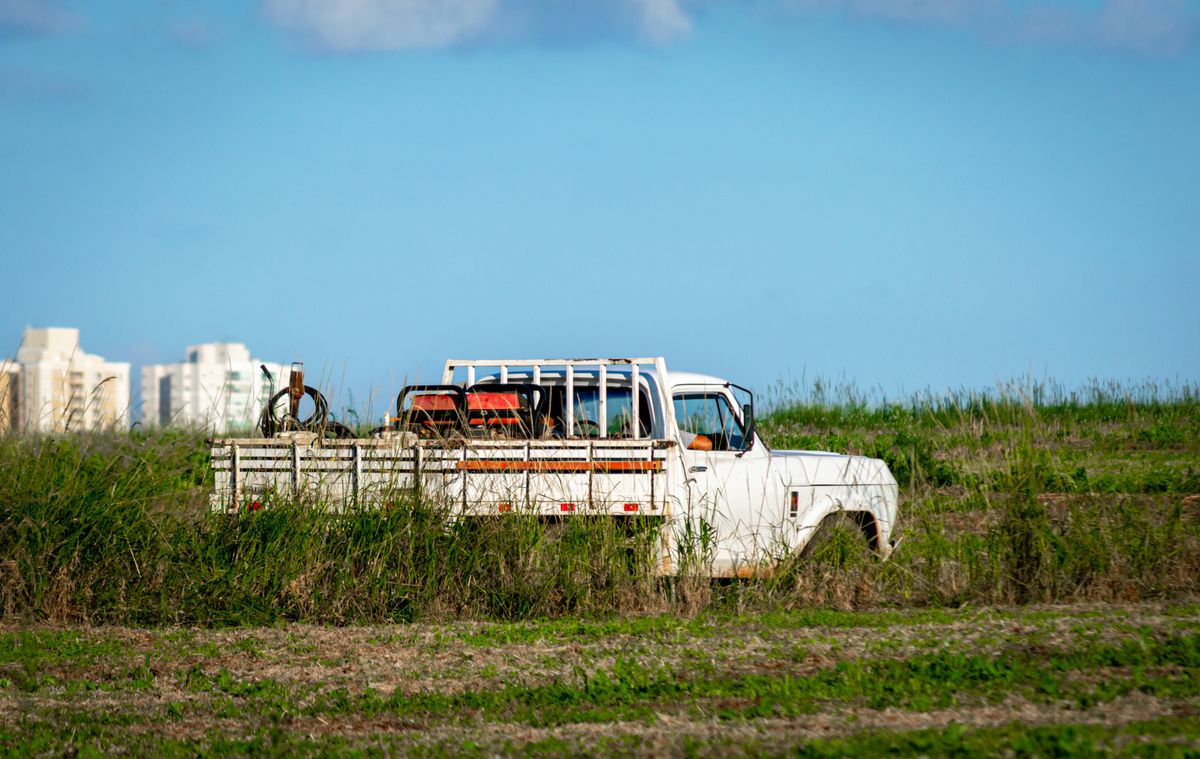
A pickup truck is, at its core, a vehicle designed to haul and tow. The frame is stronger, the suspension is built for load, and the drivetrain is usually geared for pulling. A full-size truck with a proper tow package will handle a heavy boat trailer with a calm confidence that is hard to match, and it will do it repeatedly, summer after summer, without complaint.
The truck bed is the other big advantage, and it is one that boat owners feel every weekend. Wet life jackets, a cooler, fishing rods, a tackle box, an anchor, a spare prop, and a pile of towels all go in the bed, where they can get wet and sandy without ruining anything. Try that in an SUV and you will spend Sunday evening cleaning the carpet and the seats. The bed is a workspace, and for a boater it is the right workspace.
Trucks also tend to have better cooling capacity, which matters in Fort Myers. Towing in ninety-degree heat with the AC running is one of the hardest things you can ask of a vehicle, and a truck's larger radiator and transmission cooler are built for exactly that. An SUV can tow in the heat too, but it is working closer to its limits, and that shows up over time in transmission wear and cooling-system strain.
The trade-off is daily life. A full-size truck is big. It is harder to park in a crowded lot, harder to maneuver in a tight garage, and thirstier around town.
The SUV's case: the family tow vehicle
An SUV tows with a different set of strengths. The biggest one is people: an SUV seats the whole crew in comfort, with air conditioning that actually reaches the back seat, and room for kids, grandparents, and a dog. A truck can seat five or six, but the rear seat of a crew cab is not as comfortable as an SUV's second row, and the third row of a large SUV is a genuine option for a big family heading to the ramp.
The SUV is also the better daily driver for most people. It parks easier than a full-size truck, it rides more smoothly, it is quieter on the highway, and it handles the school run, the grocery run, and the commute down Colonial Boulevard without feeling like you are driving a work vehicle. If the tow vehicle is also the family car, the SUV's everyday manners matter a lot, because boat days are two days a week at most, and the other five days are real life.
Cargo protection is another SUV strength. Gear that needs to stay dry and secure, like electronics, a good cooler, or anything valuable, rides inside the locked cabin, out of sight and out of the rain. A truck bed can be covered, but a cover is one more thing to manage, and it does not lock as securely as a closed SUV.
The SUV's weakness is capacity. Most SUVs have lower tow ratings than comparable trucks, and their suspensions are tuned for ride comfort, not load. A heavy boat trailer will squat the rear of an SUV more than it will a truck, and that affects steering, braking, and stability. Weight-distribution hitches and air suspension help, but they are workarounds for a fundamental difference in design. If your boat is heavy, the SUV has to be a large one with a proper tow package, and you have to be honest about whether it is enough.
The boat ramp: where the comparison gets real
The boat ramp is where the truck-versus-SUV question stops being theoretical. A wet ramp in Lee County is a slippery, algae-coated concrete slope, often with a drop-off at the end that you cannot see. Pulling a loaded boat trailer up that slope, in the heat, with wet tires, is the hardest single moment in the whole towing job.
Four-wheel drive helps enormously here, and it is available on both trucks and SUVs, but it is more common and more capable on trucks. A truck with four-wheel drive and a low range can crawl a heavy trailer up a slick ramp without spinning a tire. An SUV with all-wheel drive can do the job too, but it usually lacks the low range, and its traction system is tuned for road use rather than a steep, wet pull.
Rear-wheel drive versus front-wheel drive matters as well. Most trucks are rear-wheel drive, which puts the weight of the engine over the drive wheels and gives good traction on a ramp, especially with a trailer pushing down on the hitch. Many SUVs are front-wheel drive based, which means the drive wheels are at the front, away from the trailer's weight, and that is a disadvantage on a steep ramp. If you are shopping for an SUV to tow, look for a rear-wheel-drive-based model or a proper four-wheel-drive system, not a front-wheel-drive crossover with a tow hitch bolted on.
Ramp etiquette matters too. The ramps at Punta Rassa, Matlacha, and the other busy launches in the county are crowded on weekends, and a slow, struggling launch holds everyone up. A vehicle that pulls the trailer out confidently, on the first try, is a kindness to every boater waiting behind you.
Heat, salt, and the Florida towing penalty
Towing in Southwest Florida is harder on a vehicle than towing in a cooler climate, and that penalty falls on trucks and SUVs alike, but not equally. The transmission is the part that suffers most. Pulling a heavy trailer in stop-and-go traffic on US-41 in August, with the AC running and the temperature gauge climbing, is a stress test. A truck's transmission cooler is usually larger, and its cooling system has more reserve. An SUV's is usually adequate but closer to the edge.
Salt air is the other Florida factor. A tow vehicle that lives near the coast, launches at saltwater ramps, and gets dunked trailer wheels in salt water every weekend will rust faster than a car that never leaves a garage. The trailer itself is usually the first casualty, but the tow vehicle's hitch, wiring, and underbody take a beating too. Rinse the trailer and the rear of the tow vehicle with fresh water after every saltwater launch, and inspect the hitch wiring regularly. A corroded trailer-light connection is a common and annoying failure, and it is one that a quick rinse and a dab of protective grease will prevent.
When you inspect a used truck or SUV for towing duty, look underneath. Check the frame for rust, check the transmission cooler lines, and look at the hitch receiver for wear and corrosion. A vehicle that has towed a boat in salt water its whole life will show it underneath even if the paint looks perfect. Our guide to flood and salt-air damage in Florida covers what to look for, and a vehicle history report will tell you where the vehicle has lived.
Daily driving: the other six days
Here is the question most buyers forget to ask: what does this vehicle do when it is not towing? A boat owner in Lee County might tow twice a week in season and not at all for months in the off-season. The rest of the time, the vehicle is a commuter, a grocery getter, and a family car.
A truck is honest about what it is. It rides like a truck, parks like a truck, and drinks fuel like a truck. Some people love that, and if the truck is a second vehicle, none of it matters. But if it is your only car, the size and the ride wear on you, especially in snowbird-season traffic on Daniels Parkway or Summerlin Road, where a long truck is a liability in a crowded parking lot.
An SUV is easier to live with every day. It is quieter, smoother, and simpler to park. It carries people better and keeps gear dry. The compromise is that it is a less capable tow vehicle, so you have to be more careful about matching it to your boat. For a family whose boat is moderate in size and whose SUV is also the daily driver, that compromise is usually the right one.
The cost of getting it wrong
Buying the wrong tow vehicle is an expensive mistake, and it usually shows up in one of two ways. The first is the vehicle that cannot tow the boat safely: it struggles on the ramp, it sways on the highway, the transmission overheats, and every trip feels tense. The fix is a different vehicle, which means selling at a loss and starting over. The second is the vehicle that tows fine but makes daily life miserable: too big, too thirsty, too hard to park. The fix is the same, and it costs the same.
The way to avoid both mistakes is to be honest about the boat and honest about daily life, and to let the heavier demand win. If the boat needs a truck, buy a truck and accept the daily compromises. If the boat is light enough for an SUV and the SUV makes daily life better, buy the SUV. Do not buy a vehicle hoping the boat will get lighter or the parking lots will get bigger. Neither will happen.
Frequently asked questions
Can an SUV tow a boat in Lee County? Yes, if the SUV's tow rating comfortably exceeds your loaded trailer weight and it has a proper tow package. A large SUV with a tow package handles a moderate boat well. A small or mid-size crossover usually does not have the capacity or the cooling for regular boat towing, especially in Florida heat. Check the rating, weigh your trailer, and leave a margin.
Is four-wheel drive necessary for launching a boat? It is not strictly necessary on a clean, dry ramp, but it is very helpful on a wet, algae-coated ramp, which is most ramps in Lee County most of the time. Four-wheel drive gives you traction when the rear wheels start to spin, and on a steep ramp that can be the difference between a smooth launch and a stressful one. If you launch regularly, it is worth having.
What should I check on a used truck or SUV before using it to tow? Start underneath: frame rust, hitch condition, and transmission cooler lines. Check the transmission fluid for a burnt smell or dark color. Make sure the trailer wiring works, including brake lights and turn signals. Look for a tow package, which usually means a larger radiator, a transmission cooler, and a proper hitch receiver. And have the vehicle inspected by a mechanic who knows towing, not just a general once-over.
Does towing a boat hurt the tow vehicle's resale value? Heavy towing adds wear, especially to the transmission and brakes, and a buyer who can tell a vehicle has towed hard will price that in. Regular maintenance, a transmission fluid change on schedule, and a clean underside all help. Keep your maintenance records, because they are the best answer to a buyer who asks how the vehicle was used.
Should I buy the truck or the SUV first, or the boat first? The boat first, or at least know exactly which boat you are buying. The boat determines the tow vehicle, not the other way around. Buy the tow vehicle to match a boat you have already chosen, with the real loaded weight in hand, and you will get the match right the first time. Our guide to trucks and SUVs in Southwest Florida covers the broader choice, and the good deal vs money pit guide will help you judge any specific vehicle you are considering.
There is no wrong answer between a truck and an SUV for towing a boat in Lee County, but there is a wrong match, and it is the match that ignores the weight of the boat or the reality of daily driving. Know your trailer weight, be honest about how you will use the vehicle the rest of the week, and pick the one that handles the heavier demand without complaint. If you want to look at trucks and SUVs that are already here in Fort Myers, browse the inventory or call Joe at (239) 364-0709 and talk through your boat, your ramp, and your daily drive. The right tow vehicle is the one that pulls your boat up the ramp on the first try and still feels right on Monday morning.
Questions about a car?
Call Joe — he’ll give you a straight answer and, if there’s a car you like, have it ready for a test drive.
Book an appointmentBrowse inventory