Joes’ Cars Fort Myers · Buying Guide
Good Deal or Money Pit? How to Tell Before You Buy
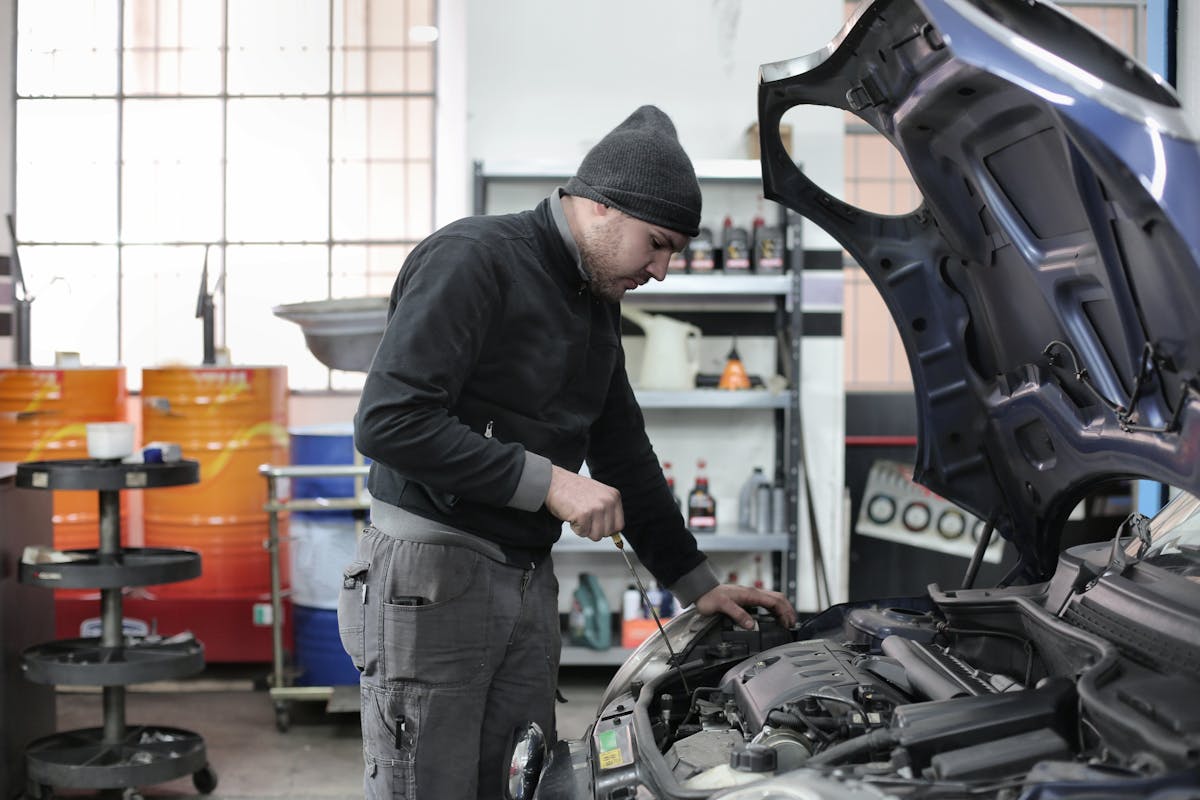
Photo by Andrea Piacquadio via Pexels
Every used-car buyer in Fort Myers has the same fear: that the bargain they just found is actually a money pit, a car that looked cheap and turns out to need repair after repair until the total cost dwarfs what a better car would have cost in the first place. That fear is justified, because money pits are real, and they are very good at looking like good deals. They are clean, they drive nicely for fifteen minutes, and the problems hide underneath, in the wiring, or in the transmission, where a quick look will never find them.
The difference between a good deal and a money pit is not luck. It is method. A good deal is a car whose price reflects its real condition, whose history is clean and honest, and whose inspection shows normal wear rather than looming failure. A money pit is a car whose price looks low because the seller knows what is wrong and is hoping you will not find out until it is yours. This guide teaches you to tell the two apart before you pay, using the checks that matter most in Southwest Florida.
A good deal has a reason for its price
Start with the price itself. A good deal is usually priced fairly for its age, mileage, condition, and history, and the seller can explain why. Perhaps it is a higher-mileage car in excellent mechanical shape, or a car from a snowbird owner who drove it gently and serviced it regularly. The reason should make sense, and it should match what you see when you inspect the car. A car that is priced well below similar cars with no clear reason is not a bargain. It is a question you have not answered yet.
Compare the car against similar cars, not against your hopes. Look at what comparable cars are listed for, with similar mileage and condition, and see where this one sits. A car priced in the middle of the range with a clean history and a good inspection is often a better deal than a car priced at the bottom with a story that does not add up. The cheapest car is rarely the cheapest to own, because the purchase price is only the first cost. Insurance, tires, brakes, air conditioning, and the repairs that a neglected car needs all come after, and they come quickly in Florida heat.
Pay attention to who is selling and how they behave. A seller who welcomes an inspection, answers questions directly, shows you service records, and lets you take a proper test drive is a seller who believes in the car. A seller who rushes you, refuses an inspection, cannot explain the car's history, or pressures you to decide today is a seller who is hoping you will not look closely. Trust the behavior as much as the car, because a good deal comes from a straight seller as often as it comes from a good car.
The inspection is where money pits are found
No guide, no history report, and no test drive replaces a pre-purchase inspection from an independent Fort Myers mechanic. The inspection puts the car on a lift and checks the things you cannot see from the driver's seat: the frame, the suspension, the brakes, the fluids, the exhaust, and the underside where salt air and flood water do their work. A good mechanic will tell you what needs attention now, what will need attention in the next year, and what is normal wear for the car's age. That information is what turns a guess into a decision.
Listen to how the mechanic talks about the car. Normal wear sounds like tires, brakes, a battery, or a belt. Those are maintenance items, and a car that needs them can still be a good deal if the price reflects it. Looming failure sounds different. It sounds like a slipping transmission, a frame that is rusting through, a head gasket that is starting to fail, or an engine that is burning oil. Those are not maintenance items. They are the repairs that turn a bargain into a money pit, and a car with one of them is a car to walk away from, no matter how good the price looks.
Get the inspection before you negotiate the final price, not after. An inspection that finds worn tires and brakes gives you a fair reason to adjust the price. An inspection that finds a failing transmission gives you a reason to walk away entirely. Either way, the inspection pays for itself many times over, and it is the single best protection a used-car buyer has. Our guide to how to buy a used car in Florida puts the inspection in the full step-by-step order, and our 15-minute test drive checklist covers what to check on the drive itself.
Florida problems that turn a bargain into a pit
In Southwest Florida, the most expensive hidden problems are the Florida ones. Flood damage is the first. A car that sat in standing water, or was driven through water deep enough to reach the floor, can look clean and drive fine for months while corrosion works through wiring and electronics. Then the problems arrive in groups: windows that stop working, warning lights that flicker, air conditioning that fails, and a car that will not start on a humid morning. Our guide to flood and salt-air damage in Florida walks through every check, from the smell of the interior to the silt in the spare tire well, and it is essential reading before you buy any car here.
Salt-air rust is the second. Cars that lived near the coast, at Fort Myers Beach, on Sanibel or Captiva, or along the canals of Cape Coral, rust from the bottom up. A frame that looks solid from above can be flaking underneath, and brake lines and fuel lines can be rusted thin long before they fail. A car with heavy underside rust is not a bargain at any price, because the repairs are structural, not cosmetic, and they do not get cheaper with time. Get underneath the car, look at the frame rails, and ask a mechanic to judge what you are seeing.
Air conditioning is the third. In Fort Myers, a weak AC is not a minor fault. It is a repair you will need in the first month, and it can be an expensive one if the compressor or the condenser has failed. Turn the AC on full blast, leave it running, and make sure it blows ice cold at idle in traffic on Colonial Boulevard, not just at highway speed on I-75. A car whose AC fades at a stoplight is telling you something, and it is better to hear it before you buy than in August traffic.
The history report and the story that does not add up
Read the vehicle history report carefully, and look for the story it tells, not just the individual entries. A car with a consistent history, regular service, and a clear chain of owners is a car you can understand. A car with gaps in the timeline, sudden moves between states, a title change that does not match the story you were told, or an odometer reading that jumps backwards is a car with a story that does not add up, and a story that does not add up is a reason to dig deeper or walk away.
Our guide to how to read a vehicle history report explains every section and what it cannot tell you. The most important thing to remember is that a clean report is not a guarantee. Plenty of damage never gets reported, and a car can have a perfectly clean report and a worn-out transmission. The report is a tool, not a verdict. Use it alongside the inspection and the test drive, and trust what your own eyes, nose, and hands tell you more than any single piece of paper.
Watch for the small inconsistencies that add up. A car described as a one-owner garage car with a report showing four owners. A car described as never having been in an accident with mismatched paint and uneven panel gaps. A car described as Florida-owned all its life with a title history that starts in a hurricane-affected area. Any one of these could have an innocent explanation, but a seller who cannot explain it clearly is a seller you should not trust with your money.
The test drive that reveals the truth
A money pit often drives beautifully for five minutes and falls apart by minute fifteen. That is why the test drive matters, and why it has to be a real drive on real Fort Myers roads. Take the car onto US-41 for stop-and-go traffic, onto I-75 for highway speed, and into a parking lot for slow-speed turns. Listen for a whine that changes with speed, a clunk over bumps, grinding when you brake, and any hesitation when you accelerate from a light. Feel for pulling, vibration, or a brake pedal that feels soft or pulses.
Run the air conditioning the whole time, at idle and at speed, because that is when a weak system shows itself. Test every electrical function more than once, because flood damage often shows up as intermittent faults that come and go. Sit in every seat, check every seatbelt, and make sure the doors close properly. If anything feels wrong, write it down and ask about it. A seller who dismisses a real problem is giving you information, and a car that hides a problem for fifteen minutes will not hide it for fifteen days.
The total cost test
Before you decide, add up the total cost of owning the car, not just the purchase price. The inspection report tells you what needs attention now and what will need attention soon. Tires, brakes, a battery, and an AC service are normal costs, and a good deal is a car whose price leaves room for them. A failing transmission, a rusted frame, or an engine that needs major work are not normal costs, and no purchase price is low enough to make them a good deal.
Factor in insurance as well. Florida requires personal injury protection and property damage liability, and the rate depends on the car, your record, and where you live in Lee County. Get a quote on the exact car before you commit, because a car that looks cheap to buy but expensive to insure is not a bargain. Add in fuel, routine maintenance, and the Florida sales tax and title fees at the tax collector, and you have the real cost. A good deal is a car whose total cost fits your budget comfortably, with room left over for the unexpected. A money pit is a car whose total cost you cannot see until it is too late, because the seller was hoping you would only look at the price.
Frequently asked questions
Is a cheap used car always a money pit? No, and that is the trap in the other direction. A fairly priced car with high miles, a clean history, and a good inspection can be an excellent deal, especially if the price leaves room for tires and brakes. The danger is not a low price on its own. It is a low price with no clear reason, a seller who will not allow an inspection, or a car with flood signs, heavy rust, or a failing transmission. Judge the car, not the price tag, and let the inspection decide.
What is the single biggest warning sign of a money pit? A seller who will not allow a pre-purchase inspection. There is no good reason to refuse one, and every bad reason points the same way. A close second is a car with flood signs, such as a musty interior, rust on the seat rails, or silt in the spare tire well, combined with a clean history report. That combination means damage that was never reported, and it means the problems will arrive later, in groups, when corrosion has had time to work.
Can a car with an accident on its history still be a good deal? Yes, if the accident was minor, the repair was done properly, and the inspection shows no lingering damage. A car with a small, well-repaired accident and a fair price can be a good buy. A car with a major accident, frame damage, or a salvage or rebuilt title deserves far more caution, because the repair quality and the long-term effects are harder to judge. Let a mechanic on a lift, not the history report alone, make that call.
How do I know if the inspection findings are normal wear or a real problem? Ask the mechanic directly, and ask them to separate the list into three groups: needs attention now, will need attention in the next year, and normal wear. Tires, brakes, a battery, and a belt are normal. A slipping transmission, a rusting frame, or an engine that is burning oil are not normal. A good mechanic will be straight with you about which group each finding belongs in, and that conversation is the most valuable part of the inspection.
What should I do if I already bought a money pit? Get a mechanic's inspection right away to document what is wrong and how serious it is, and keep every document from the sale. Talk to the seller promptly and in writing, especially if the car was described in a way that does not match what the inspection found. Then make a clear-eyed decision about whether to repair, sell, or trade the car, based on the real cost of fixing it rather than the money you have already spent. The best protection, though, is before the purchase: inspect, test drive, and never skip a step because the price looked good.
If a car looks like a bargain and you want a second opinion before you commit, call Joe at (239) 364-0709 and talk through what you found, or browse the inventory to compare it against cars that have already been checked. He will give you a straight answer about whether it is a good deal or a money pit, and he will let you inspect and test drive properly, because a car that passes an honest inspection is a car you can buy with confidence.
Questions about a car?
Call Joe — he’ll give you a straight answer and, if there’s a car you like, have it ready for a test drive.
Book an appointmentBrowse inventory