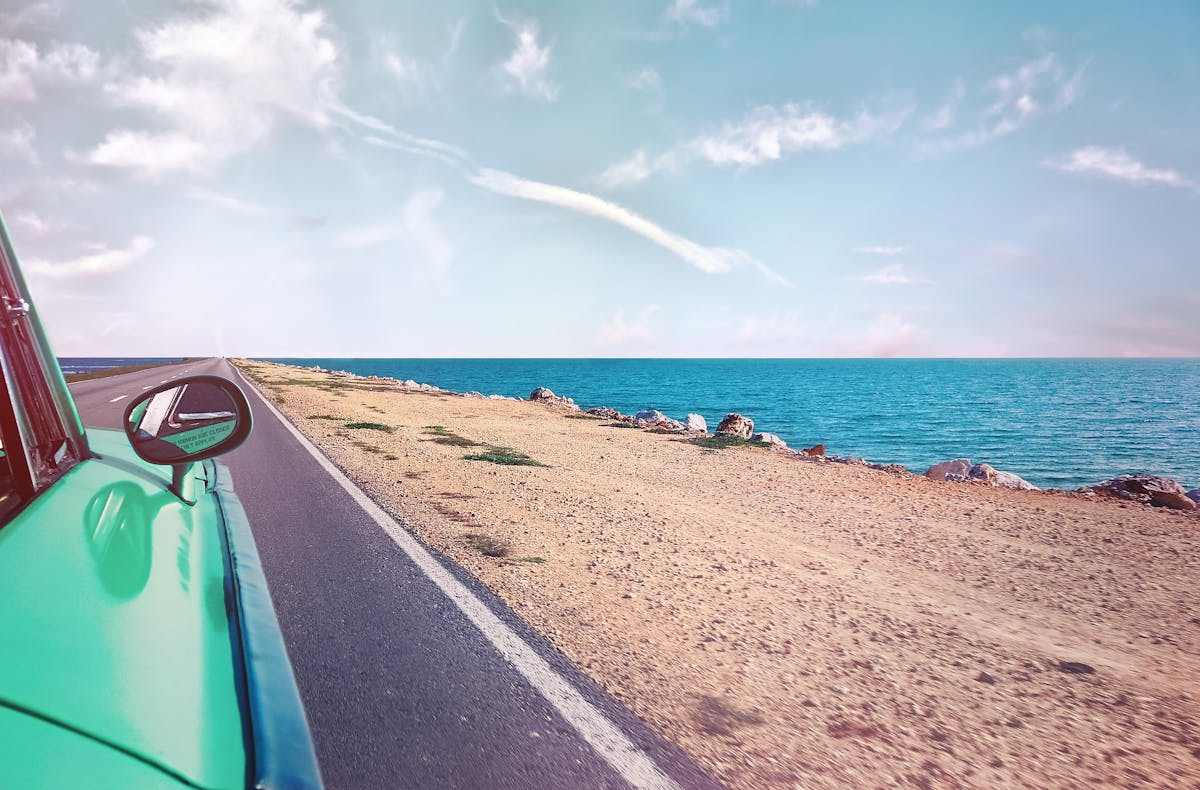
Photo via Pexels
There is a drive in Captiva that sells convertibles all by itself. It is a clear evening on Captiva Drive, the top is down, the air smells like salt and flowers, and the sun is setting over the Gulf as you roll toward the Mucky Duck. It is one of the best drives in Florida, and it is the reason so many people who live on or visit this small, quiet island village at the end of the road dream about an open-top car.
But a convertible in Captiva is not just a fun car. It is a car that lives in salt air and sun every single day, with a soft top that is the most vulnerable part of the whole vehicle. Buying one without understanding the top, the seals, and the sand is how a dream car becomes a leaky, rattly regret. This guide is about buying a convertible or a beach car for Captiva the right way, so the top-down evenings stay wonderful and the summer downpours stay outside where they belong.
The short version is that the top is everything. If the top works well, seals well, and has been cared for, the car is a joy. If it does not, no amount of charm in the rest of the car makes up for it. Read on for the checks that tell you which one you are looking at.
Why Captiva is convertible country
Captiva is built for open-top driving in a way few places are. The island is small, the roads are slow, and the scenery is the point. Captiva Drive winds past cottages, resorts, and the Captiva Village shops, and every stretch of it is better with the top down. The drive to Sanibel is the same, and the causeway crossing with the water on both sides is a moment that feels made for a convertible. This is not a car you buy for a highway commute. It is a car you buy for the island itself.
The climate helps too. Captiva has more top-down days than almost anywhere in the country, and the warm evenings stretch long into the year. A convertible here is not a fair-weather toy that sits in the garage for months. It is a car you can enjoy for much of the year, as long as you respect the days when the top needs to be up. Summer afternoons bring thunderstorms that arrive fast, and a convertible driver learns to watch the sky and put the top up early. That is part of the fun, and part of the responsibility.
The beach culture matters as well. Captiva life means sand, salt, wet towels, and fishing gear, and a beach car has to handle all of it. A convertible with a wipe-clean interior and a trunk that holds beach gear is a better island car than one with delicate leather and a tiny trunk. Think about the car as a beach car first and a convertible second, and you will choose better.
The top: the check that matters most
The convertible top is the single most important part of the car, and it deserves the most time in your inspection. Start by putting the top up and down yourself, more than once. A healthy top moves smoothly, without straining, grinding, or hesitating. If it is a power top, listen to the motor. It should sound steady, not labored. If it is a manual top, it should move freely without forcing. A top that struggles on the lot will only struggle more on the island.
Look at the top material closely. If it is fabric, look for fading, thinning, or worn spots, especially along the folds where it creases every time it goes down. If it is vinyl, look for cracking, stiffness, or patches. Check the rear window, which is often plastic on a soft top. It should be clear, not cloudy, yellowed, or cracked. A cloudy rear window is not just ugly. It is a safety problem, because you cannot see properly out of the back of the car.
Then check the seals, because the seals are what keep the rain out. With the top up, sit inside and look for daylight leaking around the edges of the top, especially where it meets the windshield and the doors. Run your hand along the seals and feel for dampness, gaps, or seals that are hard and cracked instead of soft and springy. If the car has been through a summer downpour with bad seals, the interior will show it. Look at the carpets and the seats for water stains or a musty smell. A top that seals well is the difference between a dry car and a damp one, and on Captiva the rain will test it often. For a full convertible checklist, see Buying a Convertible in Florida.
Salt air, sand, and the convertible body
A convertible on Captiva lives in salt air with its top down, which means the interior gets more salt exposure than a closed car. That is fine if the car was cared for, and it is a problem if it was not. Look at the interior for signs of sun and salt damage. The dashboard should not be cracked or sticky. The seats should not be faded or dried out. Leather that has been left in the sun without conditioner will be stiff and cracked, and cloth that has been left sandy will feel gritty and worn.
Look underneath the car too, because salt air works on the frame, the suspension, the brake lines, and the exhaust whether the top is up or down. Get underneath it, or ask Joe to put it on a lift. Surface rust on the exhaust is normal. Flaking rust on structural parts or brake lines is a reason to walk away. Check the battery terminals for the white or green corrosion that salt causes, and look at the door edges and hinges for rust where paint has chipped. For a deeper explanation of what salt and water do to a car, read Flood and Salt-Air Damage in Florida.
Sand is the other island enemy, and it gets everywhere in a convertible. Check the seat rails and the sliding mechanisms for grit, and check the trunk for sand in the corners. A little sand is normal on an island car. A lot of sand packed into the mechanisms is a sign the car was never cleaned properly, and it can jam seats, wear out moving parts, and hold moisture against the metal. Vacuum the car thoroughly after every beach day.
The test drive with the top down and up
A convertible needs two test drives, not one. Drive it first with the top down, the way you will drive it on a clear Captiva evening. Listen for wind noise, rattles, and squeaks that appear when the top is folded away. The car should feel solid, not shaky or loose, and the steering should feel stable on the causeway, where crosswinds off the water can push a light car around. Turn the radio off and listen to the car itself.
Then put the top up and drive it again. This is the test most buyers skip, and it is the one that matters when the summer storms arrive. With the top up, the car should be reasonably quiet, not full of wind whistling through gaps in the seals. The top should not flap or billow at speed. The rear window should give you a clear view. And the air conditioning should blow genuinely cold, because a convertible with the top up on a hot Florida afternoon is a greenhouse, and a weak AC makes it unbearable.
Use our 15-Minute Test Drive Checklist for the mechanical part of the test. Start the car cold, brake firmly on a safe empty stretch, turn the wheel all the way in a parking lot, and listen for anything unusual. A beach car should feel solid and predictable, not tired or worn out. If it rattles with the top down and whistles with the top up, the top is telling you something, and you should listen.
Beach cars that are not convertibles
Not every beach car in Captiva has a folding top, and for many buyers a beach-friendly car with a solid roof is the smarter choice. A small SUV is the classic Captiva beach car, with room for chairs, coolers, and fishing gear, a higher seating position for the low island intersections, and a solid roof that never leaks. Our guide to Best Family SUVs for Captiva Drivers covers the SUV case in detail, and much of it applies to beach driving too.
A small SUV or a wagon with a wipe-clean interior, rubber floor mats, and a cargo area that handles sand is a beach car that asks for very little and gives a lot. Look for a light-colored interior, which stays cooler in the sun and shows sand less, and for roof rails if you carry kayaks or paddleboards. Check the cargo area for a liner or a rubber mat, which keeps sand and wet towels from soaking into the carpet.
Whatever shape you choose, think about how the car handles the beach run. Can you load your gear without a struggle? Can you hose out the cargo area or wipe it down easily? Does the car have enough ground clearance for the sandy edges of island parking areas? A beach car that is easy to load, easy to clean, and comfortable on the causeway is a car you will love using, and that is the whole point of a beach car in Captiva.
Keeping a convertible alive on the island
A convertible that lives in Captiva needs regular care, and the top is where most of that care goes. Clean the top regularly with a product made for fabric or vinyl tops, and let it dry completely before you fold it down, because a damp top folded away will grow mildew. Treat the seals with a rubber conditioner every few months to keep them soft and sealing well. And never force the top if it sticks. If the mechanism hesitates, get it looked at before it breaks, because a broken top mechanism is an expensive repair.
Wash the car often, including the underside, and rinse it after beach days when sand and salt are all over it. Keep the interior vacuumed and the drains clear. Convertibles have drain holes that carry water away from the top mechanism and the trunk, and when those drains clog with leaves or sand, water backs up into places it should never go.
Park with the top up when you are not driving, even on a clear day, because the sun is the top's enemy as much as the rain is. A top left down in the sun fades and dries out, and an interior left open to the sun bakes. Put the top up when you park. It takes a minute, and it adds years to the top's life. If you are comparing convertibles and want to know what separates a good deal from a money pit, our guide to Good Deal vs. Money Pit will help.
Frequently asked questions
Is a convertible a good idea for Captiva? Yes, if you go in with your eyes open. Captiva is made for top-down driving, with slow island roads and warm evenings. But the top is the most important part of the car, so check it carefully, and be ready to care for it in salt air and sun.
What should I check on a used convertible top? Put the top up and down yourself, more than once, and listen for straining or grinding. Look at the fabric or vinyl for fading and cracking, check the rear window for clouding, and sit inside with the top up to look for daylight leaking around the seals.
How do I keep a convertible top from leaking in summer storms? Keep the seals soft with rubber conditioner, keep the drain holes clear of leaves and sand, and put the top up early when storms approach. A top that seals well and drains properly will keep the rain outside.
Does salt air damage a convertible more than a closed car? The interior gets more salt exposure with the top down, so the dashboard, seats, and seals need more care. The underside faces the same salt as any island car, so wash it regularly, including underneath, and rinse it after beach days.
What if I want a beach car but not a convertible? A small SUV is the classic Captiva beach car, with room for gear, a solid roof, and a higher seating position. Look for a wipe-clean interior, rubber mats, and a cargo liner, and you will have a beach car that asks for very little.
If you are dreaming about top-down evenings on Captiva Drive, start by browsing the inventory and making a short list of convertibles and beach cars. Then call Joe at (239) 364-0709 and come over from the island to see them. Put the top up and down yourself, take a drive with the top down and another with it up, and find the car that makes the sunset drive feel the way it should. Come find it, and drive it home across the causeway with the top down.
Questions about a car?
Call Joe — he’ll give you a straight answer and, if there’s a car you like, have it ready for a test drive.
Book an appointmentBrowse inventory

