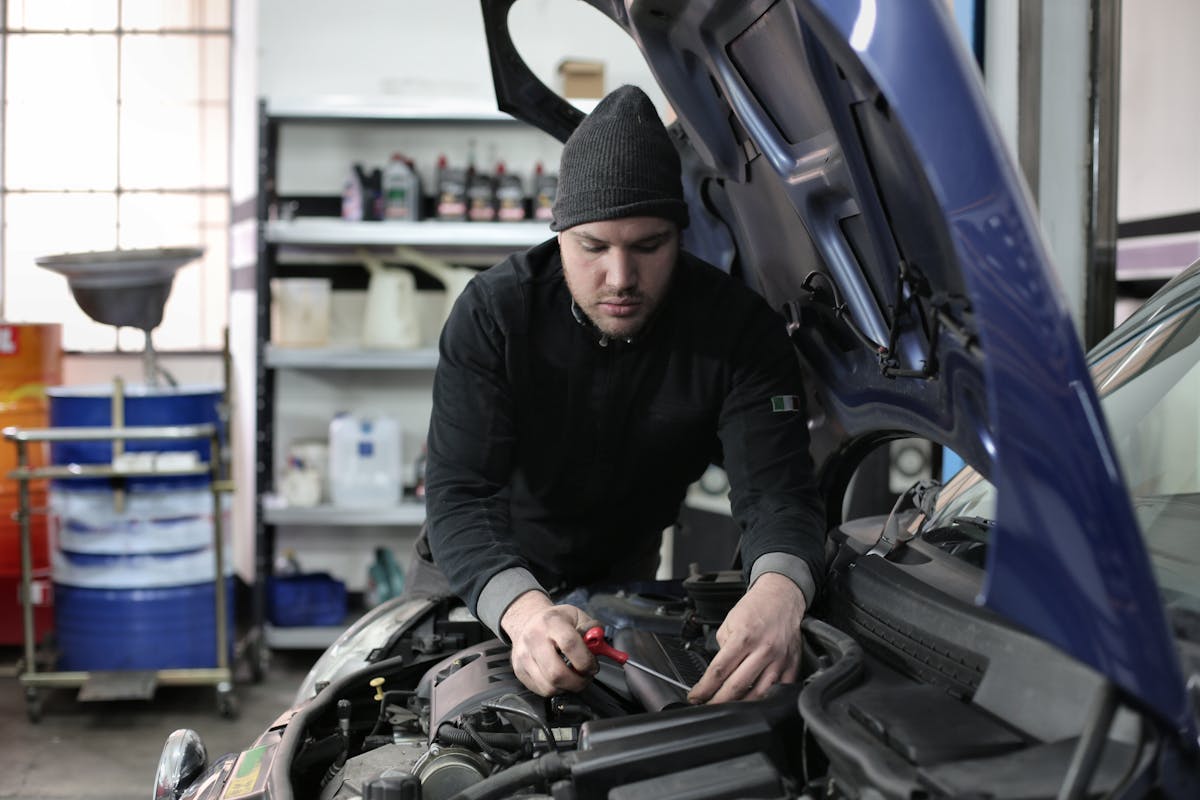
Photo via Pexels
A teenager's first car is one of those purchases that matters more than it looks like it should. It is not just a car. It is the vehicle your child will drive to school every morning, to a first job after class, and to a friend's house on a Friday night — on US-41, in the rain, in the dark, in the traffic that fills Lee County during snowbird season. The right first car is safe, simple, reliable, and forgiving of the mistakes a new driver will make. The wrong one is a source of worry every time the keys leave the hook.
San Carlos Park is a large, family-friendly residential community south of Fort Myers along US-41, near Three Oaks Parkway, and the driving here has its own character: school zones in the morning, the US-41 commute, summer downpours that flood a street in minutes, and the afternoon thunderstorms that arrive with almost no warning. A first car for a teen in this town needs to handle all of that, and it needs to do it while a new driver is still learning. This guide is about choosing that car, checking it properly, and setting your teen up to drive it safely.
What Matters Most in a Teen's First Car
Safety comes first, and it is not a close call. A teen's first car should have the safety equipment that protects a new driver when things go wrong: airbags, anti-lock brakes, stability control, and a structure that holds up in a crash. These are not luxuries. They are the difference between a frightening moment and a tragedy, and they are worth more than horsepower, a premium sound system, or a sunroof. When you are looking at cars on Joe's lot, ask which ones have stability control and side airbags, and put those at the top of the list.
Reliability comes second, because a car that breaks down is a car that leaves your teenager stranded. A breakdown on US-41 during the morning rush is not a minor inconvenience — it is a frightened teenager on the side of a busy road, late for school, and unsure what to do. Look for cars with a reputation for simple, durable running gear, and pay attention to the maintenance history. A car with regular oil changes and a cared-for cooling system will serve a teen far longer than a flashier car with a spotty record. Our complete guide to buying a used car in San Carlos Park walks through the whole process, from the drive up US-41 to the paperwork at the Lee County Tax Collector.
Simplicity comes third. A first car should not be complicated to drive. A simple, predictable car with good visibility, light steering, and brakes that feel the same every time is easier for a new driver to learn on than a powerful car with a touchy throttle. Avoid high-horsepower cars for a first-time driver. Speed is the one thing a teenager does not need more of, and a modest engine is a form of protection that costs nothing.
The Right Size and Shape
For a teen in San Carlos Park, the right shape is usually a sedan or a small SUV. A sedan is lower, easier to park, and easier to see out of in every direction. A small SUV gives a higher seating position, which helps a new driver see over the traffic on US-41, and it has a little more ground clearance for flooded streets. Both work well here. What matters is that the car fits the driver: can your teen see clearly in every direction, reach all the controls without stretching, and park the car without a struggle?
Visibility is the thing to test most carefully. Sit your teen in the driver's seat and have them check every mirror, look over both shoulders, and back into a parking space. Large blind spots are a real hazard for a new driver, and some cars have much worse blind spots than others. A backup camera helps enormously when reversing out of a school parking space, and it is worth having on a teen's car. If the car you are looking at has one, test it. If it does not, make sure the rear visibility is good enough without it.
Parking is the other test. A teen will park in crowded school lots, in tight spaces at the store, and in driveways shared with the family car. A car that is easy to park — short enough to fit, with light steering and good visibility — will be a car your teen actually enjoys driving. A car that is hard to park will be a car your teen dreads. Take the car to a parking lot on the test drive and let your teen park it several times, forward and backward.
Insurance and the Learner's Permit
Florida lets a teenager get a learner's permit at 15 and a license at 16, and the insurance conversation should start before the car does. In Florida, the minimum insurance is PIP and PDL coverage, and you will need proof of it before you can register the car at the Lee County Tax Collector. Call your insurer before you buy, and ask what adding a teenage driver will mean for your policy. A teen driver is one of the most expensive additions to an insurance policy, and the car you choose affects the cost: a modest sedan or small SUV with good safety ratings will cost less to insure than a powerful or expensive car.
There are ways to keep the cost down. A car with strong safety ratings helps. A teen who completes a driver's education course may qualify for a discount — ask your insurer. And a car that is older and less expensive to repair will generally cost less to insure than a newer, more valuable one. Do not choose a car based on insurance alone, but do not ignore the insurance cost either. It is part of the real price of the car, and it is better to know it before you buy than after.
The paperwork is straightforward. Florida gives you 30 days to transfer the title and register the car in your name, and the Lee County Tax Collector handles both the title transfer and the registration. Bring the signed title, your driver's license, proof of Florida insurance, and the bill of sale. Our guide to Florida title, registration, and insurance covers the full list of what to bring and what to expect.
The Checks Before You Buy
Start with the history report. Ask for the vehicle history report and read it the way our guide to reading a vehicle history report teaches: look for a title brand, for registrations in flood-prone areas, and for gaps in the record where a car may have sat unregistered. A clean report is a good sign, not a guarantee — it is one piece of the picture, and the physical inspection is the other.
Then walk the car slowly, and bring your teen with you. Open every door, the hood, and the trunk, and look at the edges and seams for rust bubbling under the paint. Salt air works on the underside first, so get underneath the car, or ask Joe to put it on a lift, and look at the frame, the suspension parts, and the brake lines. Pull up the trunk mat and look at the spare-tire well, which is one of the first places standing water collects. Lift the floor mats and press the carpet — dampness underneath is a red flag.
Check the tires, the brakes, and the air conditioning with extra care, because these are the three systems a teen driver depends on most and understands least. The tires should have good tread on all four, with no cracking on the sidewalls and no mismatched brands. The brakes should feel firm and stop the car straight, without pulling or shuddering. The air conditioning should blow cold and strong from every vent, because a San Carlos Park summer means the AC runs hard from April through October, and a teen who is hot and uncomfortable is a teen who is not paying full attention to the road.
Teaching the Local Roads
A new driver in San Carlos Park needs to learn the local roads the way an experienced driver already knows them. US-41 is the main road, and it is busy: commuters, delivery trucks, school buses, and visitors who are still reading the signs. Teach your teen to leave extra space in front, to watch for cars turning across traffic, and to expect the unexpected at every intersection. The morning school zones need extra care — slow down, watch for children, and never pass a stopped school bus.
Rain is the other lesson. A summer afternoon thunderstorm can turn US-41 into a river in minutes, and a new driver needs to know what to do: slow down, turn the headlights on, increase the following distance, and never drive through standing water you cannot see the bottom of. A car that hydroplanes is a car that has lost contact with the road, and a teen who has never felt that needs to know it can happen and what to do when it does. Practice driving in the rain together, in daylight, on roads you know well, before your teen has to do it alone at night.
I-75 is the third lesson. The highway is fast, and merging onto it takes confidence and judgment. Practice the merge together several times: match the speed of traffic, check the mirrors and the blind spot, and move over smoothly. Teach your teen to keep a safe following distance at highway speed, to move out of the left lane when not passing, and to plan exits well in advance. A teen who is comfortable on I-75 is a teen who can get anywhere in Lee County safely.
The Test Drive with Your Teen
Let your teen drive. This is not a courtesy — it is the test itself. A car that feels right to you may feel wrong to the person who will actually drive it every day, and the only way to know is to let them drive it. Our 15-minute test drive checklist is built for exactly this: city streets, a stretch of highway, a parking lot for slow turns, and a few minutes with the radio off so you can hear the car itself.
From Colonial Boulevard you can get onto I-75 quickly for a highway run, then come back through Fort Myers on surface streets. Listen for humming from the tires, pulling to one side, and any shudder when you brake. In the parking lot, let your teen turn the wheel all the way in both directions and listen for clicks or groans. Let them back into a space and check the mirrors, the camera if the car has one, and how easy it is to see behind them.
Before you hand the keys back, sit in the car together for a minute with everything off. Let your teen adjust the seat and the mirrors the way they would for their own drive. Reach for the controls without looking. If something feels wrong — a seat that will not adjust, a window that sticks, a smell you cannot place — trust that feeling and ask Joe about it. A good first car should feel right from the driver's seat, not just look right from the curb.
Frequently asked questions
What is the best type of first car for a teen in San Carlos Park? A sedan or a small SUV with strong safety ratings, modest power, and good visibility. Avoid high-horsepower cars. The right car is one your teen can see out of clearly, park easily, and drive predictably in rain and traffic.
When can my teen get a learner's permit in Florida? At 15, and a license at 16. The permit stage is a good time to practice the local roads together — US-41, the school zones, and driving in the rain — before your teen drives alone.
How much will insurance cost for a teen driver? It varies by car and by insurer, but adding a teen is one of the most expensive changes to a policy. A modest car with good safety ratings costs less to insure than a powerful or expensive one. Call your insurer before you buy and ask for a quote on the specific car.
What should I check first on a used car for my teen? The tires, the brakes, and the air conditioning — the three systems a new driver depends on most. Then check underneath for salt-air rust and inside for any sign of flood damage, and read the history report the way our guide to reading a vehicle history report teaches.
Should my teen come to the test drive? Yes. Let them drive the car on real roads, park it several times, and sit in it with everything adjusted the way they would drive it. A car that feels right to the person who will drive it every day is the right car.
Browse the inventory and pick two or three cars to see, then call Joe at (239) 364-0709 to set a time — or book an appointment and bring your teen up US-41 for a look. The right first car is worth the 20-minute drive.
Questions about a car?
Call Joe — he’ll give you a straight answer and, if there’s a car you like, have it ready for a test drive.
Book an appointmentBrowse inventory

