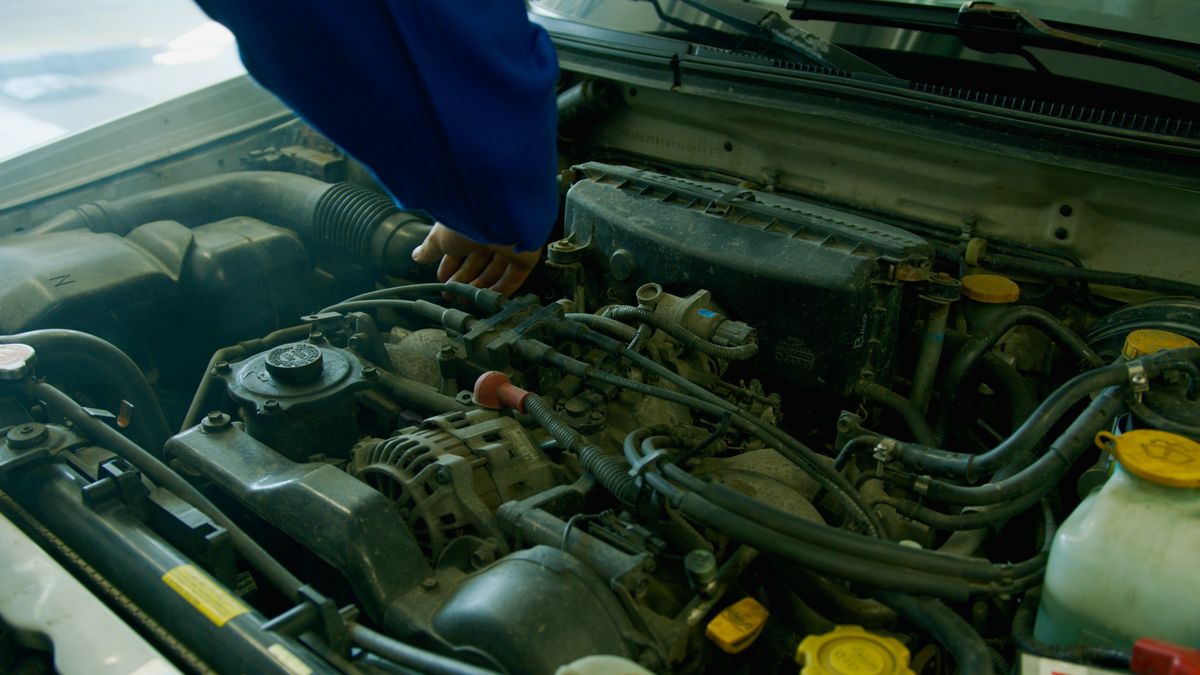
Photo via Pexels
The Honda Civic has been in production for more than fifty years, and over that time it has gone through eleven generations. That is a lot of history, and it means that two used Civics sitting side by side on a lot in Fort Myers can be very different cars — different engines, different transmissions, different technology, and different weak points. The badge is the same. The car underneath is not.
That is why the question of which year to buy matters so much with a Civic. Pick the right generation and you get one of the most dependable cars ever built, with decades of parts availability and mechanics in Lee County who know the car inside out. Pick a year with a known weak spot and you can end up spending your ownership fighting a problem that a different year never had. The good news is that the Civic's history is well documented, and the strong years are easy to identify once you know what to look for.
This guide walks through the Civic's generations the way a Fort Myers buyer should think about them: which years are the strongest buys, which ones deserve a closer look, and how the Florida climate — the heat, the salt air, the summer downpours — changes the answer. There is no single best year for everyone. The right year depends on what you need the car to do, how long you plan to keep it, and how much technology you want. But there are clear patterns, and this guide lays them out.
The golden years: 2012 through 2015
If you want the simplest, most proven used Civic you can buy, the 2012 through 2015 models are hard to beat. These are the ninth-generation Civics, and they are the last Civics to use the 1.8-liter engine with a conventional automatic transmission — a combination that Honda refined over many years and that has one of the best reliability records of any car on the road. There is no turbocharger, no continuously variable transmission, and no complicated new technology to go wrong. It is a simple, honest car, and in Fort Myers that simplicity is a real advantage: fewer systems means fewer things for the heat and humidity to attack.
These cars are also old enough now that their weak points are well known and easy to check. The main things to look for are the air conditioning system, which works hard in Southwest Florida and can need a compressor or condenser repair, and the usual Florida checks: flood history, salt-air rust underneath, and tires that have aged in the sun. Check the oil level and the coolant, listen for a cold-start rattle, and take the car on a real test drive — stop-and-go on Colonial Boulevard or US-41, a highway stretch on I-75, and a parking lot for slow-speed maneuvering. If a 2012 through 2015 Civic passes those checks, it is one of the safest used-car buys in Lee County, and it will likely still be running long after you have moved on to your next car.
The one thing to keep in mind is age. The newest of these cars is more than a decade old now, so even a well-kept one will have wear on the suspension, the brakes, and the interior. That is normal, and it is the reason a pre-purchase inspection matters even on a car with a great reputation. Our guide to buying a used Civic in Fort Myers walks through the full inspection in order.
The modern pick: 2016 through 2021
The tenth-generation Civic, sold from 2016 through 2021, is a bigger, quieter, more refined car than the one it replaced, and it is the Civic most Fort Myers buyers end up choosing when they want something newer. It has two engine choices: a 2.0-liter four-cylinder that is simple and proven, and a 1.5-liter turbocharged engine that is stronger and more economical. If you want the simplest ownership, the 2.0-liter is the pick — it is the closest thing in the modern Civic lineup to the old 1.8-liter in terms of straightforward reliability. The turbo engine is a good engine, but it needs a closer look: on some cars, fuel can get into the oil, particularly on cars driven mostly on short trips where the engine never fully warms up, and in Fort Myers a lot of Civic driving is exactly that kind of short hop.
These years also brought the continuously variable transmission to most Civics, and it is generally reliable, but it needs to be tested properly. A healthy one is quiet and smooth. A failing one whines or drones, shudders when you accelerate gently from a stop, or hesitates before it gets the car moving. Drive the car the way you will actually drive it — stop-and-go on US-41, a highway run on I-75 — and listen. The other thing to check on these years is the air conditioning: the condenser is a known weak point, and a system that only cools at highway speed or that blows cold and then warm in cycles has a problem that will get worse in August, not better. Test the AC at idle and at speed before you go look at one.
The 2016 through 2021 Civics also have more technology than the older cars — a larger infotainment screen, a backup camera, and driver-assistance features on many trims — and that technology is worth testing. The screen should respond promptly, the camera should show a clear image, and the Bluetooth should pair with your phone without a fight. A car with a dead screen or a camera that does not work is not a dealbreaker, but it is a repair you should know about before you buy, not after.
The years to approach carefully: 2006 through 2011
The eighth-generation Civic, sold from 2006 through 2011, is a car with a split personality. On the one hand, the 1.8-liter engine is one of the most durable Honda has ever built, and a well-kept example of this generation can be a genuinely good buy — simple, economical, and cheap to maintain. On the other hand, this generation has the most known weak points of any modern Civic, and they are concentrated in exactly the areas that matter most in Florida.
The biggest issue is the engine block. Some 2006 through 2009 Civics developed a crack in the block near the coolant passages, which shows up as unexplained coolant loss or a visible coolant leak. Check the coolant level in the overflow tank, look for dried coolant residue around the engine, and ask whether the car has ever needed coolant topped up between services. If the coolant is low and the owner cannot explain why, get the car inspected before you go any further. The second issue is the dashboard, which on these years can crack and become sticky in hot climates — and Fort Myers is exactly the kind of climate that brings it out. A cracked dashboard is not a mechanical problem, but it is a sign of how the car has lived, and it is worth knowing about.
The third issue is the air conditioning compressor, which on these years can fail or seize, sometimes without much warning. Test the AC thoroughly, at idle and at speed, and listen for a grinding or rattling noise when it is running. None of these problems means you should rule out a 2006 through 2011 Civic entirely. They mean you should check those specific things, and you should be willing to walk away if the car fails them. A clean example of this generation is still a good car. A dirty one is a project, and projects are expensive in ways that do not show up until you have already bought the car. Our guide on common Civic problems covers each of these issues in detail.
The newest Civics: 2022 and newer
The eleventh-generation Civic, sold from 2022 onward, is the most refined Civic ever built. It is quieter, more comfortable, and better equipped than any Civic before it, and it brings the car's technology fully up to date. If you want the newest used Civic you can buy, this is the generation to look at. The 2.0-liter engine carries over as the simple, proven choice, and the 1.5-liter turbo continues as the stronger option. The continuously variable transmission is refined, the interior is a step up in quality, and the driver-assistance features are standard on most trims.
The trade-off is that these cars are still new enough that their long-term weak points are not fully known yet, and they are the most expensive used Civics on the market. That is not a reason to avoid them — it is a reason to be clear about what you are paying for. You are paying for a newer car with fewer miles, a more modern interior, and more safety technology, and for many Fort Myers buyers that is exactly the right trade. The checks are the same as for any used car: the Florida checks first — AC, rust, flood — then the engine and transmission, then the test drive. A 2022 or newer Civic that has spent its life in Southwest Florida still needs the salt-air and flood checks, because the climate does not care how new the car is. And the AC still needs to be tested at idle and at speed, because a weak system in a new car is just as miserable in August as a weak system in an old one.
How to choose your year
The best year for a used Civic is the one that matches your life, not the one that tops a list. If you want the simplest, most proven car and you are comfortable with an older car, the 2012 through 2015 models are hard to beat. If you want something newer, quieter, and better equipped, the 2016 through 2021 cars are the sweet spot for most Fort Myers buyers, with the 2.0-liter engine as the simplest choice. If you want the newest Civic you can buy, the 2022 and newer cars are excellent, and the same checks apply. If you are looking at a 2006 through 2011 Civic, check the engine block, the dashboard, and the AC compressor before anything else — and be ready to walk away if the car fails those checks.
Whatever year you choose, the process is the same. Read the vehicle history report, and our guide to how to read a vehicle history report will show you how. Take a real test drive on Fort Myers roads — stop-and-go on Colonial Boulevard, a highway stretch on I-75, a parking lot for slow-speed maneuvering — and run the AC the whole time. Get a pre-purchase inspection from an independent mechanic, and if the seller will not allow one, walk away. The year on the title matters, but the condition of the car in front of you matters more, and an inspection is the only way to know it.
Frequently asked questions
What is the best year for a used Honda Civic? For most Fort Myers buyers, the strongest picks are the 2012 through 2015 models for simplicity and proven reliability, and the 2016 through 2021 models for a newer, more refined car. The 2.0-liter engine is the simplest choice in the newer generation. The 2022 and newer Civics are excellent too, and the same Florida checks apply. The right year depends on what you need the car to do and how long you plan to keep it.
Which Civic years should I avoid? No year should be avoided outright, but the 2006 through 2009 models deserve the closest look, because of the engine block cracking issue and the dashboard and AC compressor problems on that generation. A clean example is still a good car. The point is not to skip those years — it is to check those specific things before you buy, and to walk away if the car fails them.
Is a 2016 or newer Civic with a turbo engine a good buy? Yes, for most buyers it is, but it needs a closer look than the 2.0-liter. Pull the dipstick and smell the oil for gasoline, and check whether the oil level reads above the full mark. Those are signs of fuel getting into the oil, which shows up most on cars driven mainly on short trips. If the oil looks and smells right, the turbo engine is a strong, economical choice.
Does the year matter more than the condition? Condition matters more. A well-kept 2012 Civic with a full service history is a better buy than a neglected 2019 with the same mileage. The year tells you which weak points to check. The inspection tells you whether this specific car has them. Always get a pre-purchase inspection from an independent mechanic before you buy.
Once you know which year fits your life, the next step is to find the right car. Browse the current inventory at Joes' Cars, pick the Civic generation that matches what you need, and come take it for a drive on real Fort Myers roads. Or call Joe at (239) 364-0709 and talk through the years you are considering — he will tell you straight which generation fits your budget and your life, and he will help you check the car properly before you buy it.
Questions about a car?
Call Joe — he’ll give you a straight answer and, if there’s a car you like, have it ready for a test drive.
Book an appointmentBrowse inventory

