Photo via Pexels
There is no better place in Florida to own a coupe than Fort Myers. The weather cooperates most of the year, the roads along the Caloosahatchee River and out toward the coast are made for a car that handles well, and a two-door car turns an ordinary drive down McGregor Boulevard into something worth looking forward to. A coupe is a car you buy because you want it, not because you need it — and that is a perfectly good reason, as long as you buy it wisely.
The trick with a used coupe is that the fun factor can blind you to the practical checks. Coupes tend to be driven harder than sedans, they sit lower, and their owners sometimes spend money on appearance instead of maintenance. This guide walks through what makes a coupe work in Southwest Florida, what to inspect before you buy, and the mistakes that turn a dream car into a repair bill.
Why a coupe works in Fort Myers
Fort Myers is a coupe-friendly town in ways that are easy to overlook. The winters are mild and dry, which means you can enjoy a car built for driving pleasure nearly all year instead of storing it for months. A convertible coupe is genuinely usable here in a way it is not in most of the country, and even a fixed-roof coupe benefits from the long season of clear evenings and open roads.
The driving itself suits a coupe too. The run along McGregor Boulevard under the royal palms, the sweep of Summerlin Road toward the beaches, and the open stretches of I-75 south toward Naples are all roads where a well-balanced coupe feels at home. You do not need a racetrack to enjoy a car that steers sharply and brakes confidently — you just need a road with a curve in it and a reason to drive it.
There is a practical side as well. Many Fort Myers households are one- or two-person households, whether retirees, snowbirds, or young professionals, and a coupe fits that life perfectly. If you rarely carry rear passengers, you are not giving anything up by choosing two doors. The trunk of most coupes is bigger than people expect, and a weekend bag, a set of golf clubs, or a cooler for a beach day all fit without a struggle.
And then there is the simple truth: a coupe makes you smile. A car you enjoy driving is a car you will take care of, and a car you take care of lasts longer. That is not a small thing when you are choosing a used vehicle you plan to keep for years.
The coupe trade-offs you need to accept honestly
Before you fall in love, be honest about what a coupe gives up. Rear seat access is the obvious one. Getting into the back of a coupe means folding a front seat forward and climbing in, and getting out again is the same move in reverse. If you regularly carry adults in the back, a coupe will frustrate you within a month. If the back seat is for occasional use — a grandchild, a friend on a short trip — it is manageable, but test it yourself before you decide.
Visibility is the second trade-off. Coupes have thick rear pillars and small rear windows, and the blind spots are larger than on a sedan. On a busy stretch of US-41, where traffic merges constantly and snowbird season brings drivers who are unfamiliar with the roads, good visibility matters. Check the mirrors, use the backup camera if the car has one, and on your test drive, pay attention to how much you can actually see when changing lanes. A coupe with a blind spot monitoring system is worth seeking out.
Ride comfort is the third. Sporty coupes often ride on firmer suspension and lower-profile tires, which feel great on smooth pavement and less great on the patched and potholed stretches of older Fort Myers roads. The roads around the River District and some of the older neighborhoods in Cape Coral are not always smooth, and a stiff suspension will let you know about every imperfection. Take the coupe over a rough patch on your test drive, not just the smooth highway, and decide whether the ride is one you want to live with every day.
Finally, think about insurance and running costs. A coupe can cost more to insure than a comparable sedan, and performance tires wear faster and cost more to replace. Florida heat is hard on tires and batteries, so budget for both. None of this should scare you off — it should simply be part of the decision, not a surprise after the purchase.
What to inspect on a used coupe
Coupes get driven enthusiastically, so the inspection matters more than it does on a commuter sedan. Start with the tires. Uneven wear across the tread, especially wear on the inside or outside edges, can mean alignment problems or worn suspension components. Check that all four tires match in brand and size — mismatched tires on a performance car are a sign that the previous owner cut corners, and they can make the car handle unpredictably.
Next, look at the brakes. A coupe that has been driven hard will have worn brakes, and you can feel it on the test drive: a pedal that pulses, a steering wheel that shakes under braking, or a grinding noise all mean the brakes need attention. Check the rotors through the wheels if you can — deep grooves or a heavy lip on the edge mean they are due for replacement.
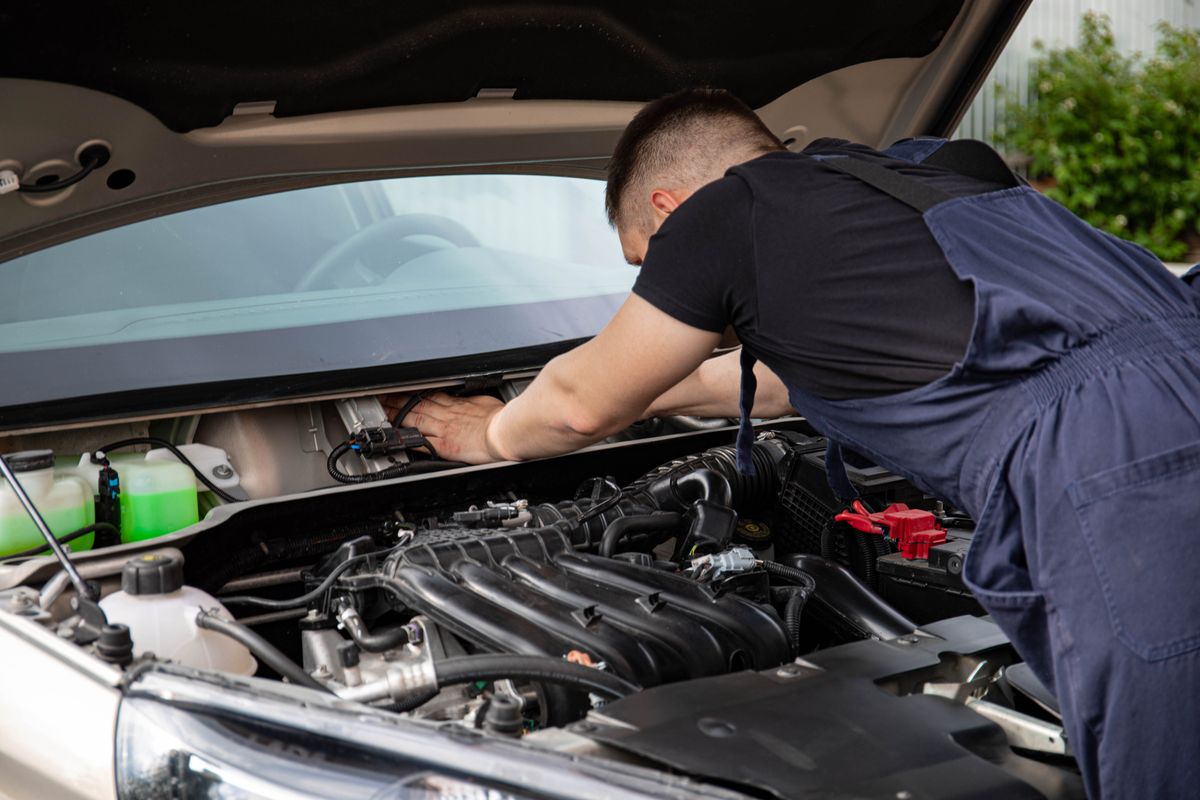
Under the hood, look for leaks and modifications. A clean engine bay is nice, but a suspiciously spotless one on an older car can mean someone pressure-washed it to hide leaks. Look for oil around the valve covers, coolant residue near the hoses, and any aftermarket parts that look hastily installed. Modifications are not automatically bad, but a coupe with a modified exhaust, intake, or suspension needs a closer look, because a poorly done modification can cause problems that are hard to diagnose and expensive to undo.
Do not skip the underside. Coupes sit low, and Fort Myers has its share of steep driveway aprons, speed bumps in gated communities, and flooded streets after summer downpours. Look for scrapes on the front bumper and the undercarriage, and check the oil pan and exhaust for damage. A car that has bottomed out repeatedly can have hidden damage to the suspension and the exhaust system.
Florida checks: sun, salt air, and flood history
Florida's climate is tough on coupes in specific ways. The sun is the first enemy. A coupe that spent years parked outside will show it: faded paint on the roof and hood, a cracked dashboard, and leather seats that are dry and split. Run your hand over the dashboard and check for cracks, and sit in the driver's seat to see if the leather or vinyl has hardened. A sunshade and regular conditioning help, but damage that is already done cannot be undone cheaply.
Salt air is the second enemy, and it matters most for coupes that lived near the coast — Fort Myers Beach, Sanibel, Captiva, and the riverfront homes along the Caloosahatchee. Check the undercarriage for rust, look at the exhaust system, and inspect the brake lines. Surface rust is normal on an older car, but flaking or perforated metal is a warning. Our guide to flood and salt air damage in Florida explains exactly where to look and what to look for.
Flood history is the third check, and it is the one that can kill a deal outright. A coupe that sat in standing water after a storm or a flooded street can have corroded wiring, a damaged transmission, and electrical gremlins that appear months later. Read our guide on how to read a vehicle history report and run the report before you commit. Then check for the signs yourself: a musty smell that air freshener cannot hide, silt or sand under the seats or in the trunk, rust on the seat bolts, and moisture under the carpet. If you find any of those, walk away or get a professional inspection before you spend another minute on the car.
The air conditioning deserves its own mention. A coupe's cabin is small, so the AC should cool it quickly — if it does not, something is wrong. Run it on full blast during your test drive and make sure the air gets genuinely cold. In a Fort Myers summer, a weak AC is not an inconvenience, it is a reason not to drive the car.
The test drive: what a coupe should feel like
A coupe test drive should tell you three things: how the car accelerates, how it handles, and how it stops. Find a safe stretch of road — the on-ramp to I-75 is a good place — and accelerate firmly. The car should pull smoothly without hesitation, jerking, or strange noises. A hesitation or a stumble under acceleration can mean anything from old spark plugs to a failing fuel pump, and you want to know which before you buy.
Take a few curves at a normal, legal pace and feel how the car responds. The steering should be precise, the car should stay flat through the turn, and there should be no clunking or knocking from the suspension. Drive over a rough patch and listen for rattles — coupes have long doors and large glass, and worn bushings or loose trim will announce themselves quickly.
Brake firmly from a moderate speed on a clear, straight road. The car should stop straight, without pulling to one side or vibrating through the pedal. If the steering wheel shakes under braking, the rotors are warped. If the car pulls, the brakes or the alignment need work. Both are fixable, but both cost money, and both belong in your negotiation.
Finally, drive the car the way you will actually drive it. Cruise down Colonial Boulevard in traffic, park it in a tight lot, back it out of a space, and see how the visibility feels in the real world. A coupe that is thrilling on an empty road and miserable in a parking lot is not the right daily driver. If you want a full checklist for the drive, our 15-minute test drive checklist covers everything to check before you hand over any money.
Frequently asked questions
Is a used coupe a good daily driver in Fort Myers? Yes, for the right person. If you rarely carry rear passengers, enjoy driving, and want something fun for the daily commute on I-75 or US-41, a coupe is a great daily driver. If you regularly carry adults in the back seat or need to haul large cargo, a sedan or a wagon will serve you better. Test the back seat yourself before you decide.
Do coupes cost more to insure in Florida? Often, yes. Insurance rates depend on the car, your driving record, and your coverage, and sporty two-door cars can carry higher premiums than a comparable sedan. Get a quote for the specific car you are considering before you buy, so the insurance cost is part of your decision rather than a surprise afterward.
What should I check first on a used coupe? Start with the tires, brakes, and undercarriage, then check for flood damage and sun damage to the interior. Read our guide to flood and salt air damage in Florida for the full Florida checklist, and always get a pre-purchase inspection from an independent mechanic before you buy.
Are convertibles practical in Fort Myers? More practical here than almost anywhere else in the country. The mild winters mean you can drive with the top down for much of the year, but check the convertible top carefully — look for tears, stains, and leaks, and make sure it opens and closes smoothly. A top that leaks in an afternoon thunderstorm is a problem you want to find on the test drive, not on your first rainy commute.
Should I worry about a coupe with high mileage? Not necessarily. Mileage matters less than maintenance. A well-maintained coupe with complete service records can be a better buy than a low-mileage car that was neglected. Judge the car on its condition, its history report, and the inspection — and if you want help reading that history report, our guide to vehicle history reports walks through it line by line.
A coupe is a car you buy with your heart, and that is fine — just bring your head along for the inspection. Check the tires, the brakes, the underside, and the history. Take a real test drive on the roads you drive every day. And when you find the one that feels right and passes the checks, you will have a car that makes every trip down McGregor Boulevard a little better. Browse the current inventory at Joes' Cars, or call Joe at (239) 364-0709 to book an appointment and see the coupes in person.
Questions about a car?
Call Joe — he’ll give you a straight answer and, if there’s a car you like, have it ready for a test drive.
Book an appointmentBrowse inventory

